LINX™ · The Memory-Video EnginePatent PendingConfidential
A memory, made true, and given away.
How LINX turns a camera roll into a cinematic, bookable memory film — one machine, a million guests. This is the complete, proprietary record of how it is built, and the laws it must never break.
Start from orbit. A camera roll is only data until someone is moved by it — the whole engine exists to earn that one feeling, at scale.
Scroll to descendPhantasos Magnetic Glass · Engine v1.0 · Proprietary & Trade Secret
IThe Thesis
From that altitude, one question — what is all this machinery for?
We build a memory, not a montage — and we make it easy to book.
The film closes one loop — experience, memory, share, discover, book. Distribution is already ours. The only job left is to be worth sharing, and to make booking the next trip effortless.
The irreducible unit of the whole product is the Sandwich™: a guest shares a memory; a viewer books the same experience through the same link; the credit is tracked end to end. With no experience there is no funnel — only the gift. The film is welded to a real, bookable experience and carried on a LINX link that reuses the exact convention of a shared memory-book, so video wires over the existing trust loop with no rewrite.
MemoryThe guest's own film — the heirloom, theirs in full. Zero booking chrome in the master pixels.
— welded to —
ExperienceThe real, bookable thing the memory came from. One tap to book it, right there.easy to book
— tracked by —
AttributionOne link, one tracked path from share to discovery to booking.
Make it effortless to book
Booking through the platform must be really easy — a memory with attribution for booking the experience, easy. The memory carries a frictionless, one-tap path to book the exact experience it depicts. (Live-edge fix: the share / book / join buttons were not clicking through on mobile — logged and prioritized.)
The film is not the product. The loop is. The film IS the ad; the moment is the product — the most beautiful ad ever made, because it is not an ad.
The governing craft doctrine: template the emotion, generate only the glue, and never generate the subject. The beat structure, pacing, grade, and music-selection are templated (the moat is taste in the template). Selection, dedupe, motion paths, and beat-sync are the bounded generative glue. The subject footage is never generated — the real, slightly-imperfect frame always wins the climax. This is the Mirror Doctrine: 0 AI motion, 0 fabricated pixels.
Every memory we make has one job: to start the next one.
The north star — every traveler becomes the next curator.
This loop is the product. A memory is the share, the experience, and the artifact you bring home — and it compounds on the Trust Graph. The whole memory-video engine exists to make the memory worth sharing, so the loop turns again.
It starts with the memory — the seed that feeds the entire LINX strategy. More memories → more shares → more trust data → better recommendations → more bookings → more curators → more memories. The flywheel compounds on the Trust Graph. LINX is built around humans, not roles.
The Memory Loop
Memories are the share, the experience, and the artifact you bring home.
1
The memory IS the share
A curator gives a friend a memory — a thank-you, a moment, a story they actually lived. Not a link. A keepsake.
2
The friend books and lives it
Trust converts. They experience it themselves and return home transformed — through the same attributed LINX link.
3
They bring back their own memory
A digital keepsake to share with the next person. The loop continues — every traveler becomes the next curator.
Your world — every pin is a chapter
The memory doesn't just get shared — it gets added to the traveler's world: a pin on their personal globe, where each pin is a chapter of a life actually lived. Share your world and the next person steps into your map, opens a chapter, and books the experience behind it — then starts building their own. The memory populating the map is how the loop becomes a place you live in, not just a link you send.
Memory pins — where you've beenDream pins — where you're goingTap a pin → read the chapter → book it
"Every pin is a chapter." — the traveler's world, where each memory becomes a place on the map.
The economics that keep the loop turning
Every booking through the loop carries a 10% commission, split 60% LINX · 30% the curator · 10% guest travel-credit — the curator is paid once the guest completes the trip. Attribution is lineage-durable and screenshot-survivable, and the K-factor is a measured, inflation-resistant metric (a single actor can't inflate it), instrumented in lib/memory-book/attribution/funnel.ts. 84% of luxury bookings are referral-driven; this is how we own that referral.
IIIThe 21 Inspirations
We did not guess what great looks like. We took apart everyone who ever tried.
Twenty-one products, to inspire and invert.
The R&D corpus dissected 21 of the world's best video and AI-video editors on a fixed schema — who, what, when, where, why, how — then distilled each to what we take and what we invert. For our engineers: every card carries the mechanism and the live reference links.
Cross-cutting patterns — and how LINX implements or inverts each
The eight universal anti-patterns we invert
1 · Metered per-second credits → credit anxiety2 · No emotional narrative engine3 · Generic stock / synthetic footage4 · House-style sameness (sibling films)5 · Watermark / paywall the magic6 · TikTok aesthetic over Aman restraint7 · Reliability cliff / hanging export jobs8 · ByteDance biometric content-license ToS
CLIs & APIs to build on and learn from
What we buy vs build. Each surface below plugs into a specific stage of the pipeline — engineers should evaluate these directly.
Surface
Why / where it plugs in
Reference
The render-engine decision
Master render → Remotion + @remotion/lambda on LINX's own AWS — the single highest-conviction call. One React composition powers both the in-browser preview and the deterministic cloud render, so there is zero editor-vs-render model drift. Instant preview → WebCodecs + Mediabunny (~5KB vs tens of MB, 5–10× faster than WASM, normalizes iPhone HEVC). ~$0.05–0.20 per finished film. Rejected: Shotstack/Creatomate (private footage through a 3rd party), Etro (GPL), all generative-subject tools.
IVThe Story Engine
A machine can cut. Only a story engine can move someone.
Open on the people — the hook — not the map.
People make every great experience. You introduce the characters of the story first, then the place, then being on the spot. The map is one option, never the lead. And every format ships in two aspects: mobile 9:16 and web/desktop 16:9.
Daily Highlight
Trip Film
length
15–20s
60–120s
aspect
9:16 mobile · 16:9 desktop
9:16 mobile · 16:9 desktop
arc
day-shape arc (3–7 beats)
five-act journey
render
on-device, <10s
cloud (Remotion/Lambda), ~15–30s
source
single guest's day
trip-wide, consent-pooled
booking
wrapper only
ZERO chrome in master; wrapper only
The five-act grammar — people first
The People (the hook) → The Place → On the Spot → The Peak → Return / Farewell. You open with a hook — the faces, the crew, the ones who turned a harbour into a family — then the place reveals itself, then you are there. Built on chronology + itinerary + people-recurrence, the arc Google and Apple structurally cannot build.
Mobile · 9:16 · the share format
Web / desktop · 16:9 · the keepsake format
The moods — the single creative dial
SereneEpicIntimateExpedition
A guest picks one feeling — that is the entire creative decision. Each mood is a locked bundle of pacing curve + licensed score + LUT.
The Witness Edit Boundary™
Guest refinement is subtractive + re-select + one mood. Rejected under rule witness-boundary: reorder (breaks chronology), time-stretch (fabricates duration), generate. It is a witness, not a brochure.
The Settle™ — the one engineered beat
Triggered at dusk (local sunset, from GPS + itinerary), the film does not pop up — it arrives. The day's hero still fades up at 60% with one slow 2.5D parallax breath — real pixels only. The Serene score lands its first lift on the real peak. The champagne place-plate types in from the operator's itinerary name. Motion settles to a held still, like a photograph set down on a table. One line: "Share it with someone." Then silence. The living-still device appears exactly once in the entire product.
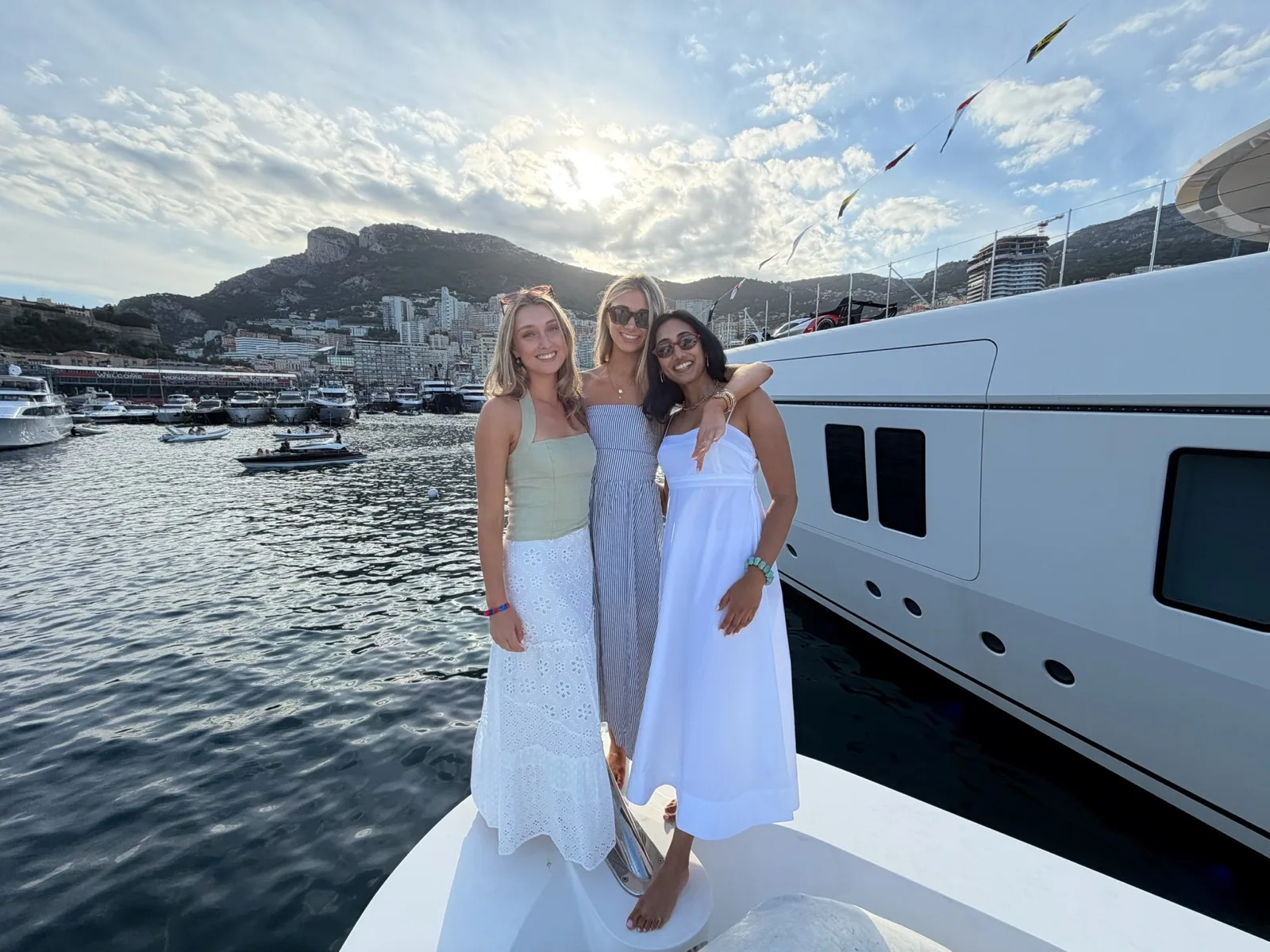
The felt bar — the hand-rendered Monaco Cinematic (36.7s). The auto-engine is proved separately; this is the target, never shown as proof the machine makes this film today.
VThe Technical Architecture
A recipe a machine runs a million times can fail a million times. So the order itself is the safeguard.
A film is a recipe, not a file.
The engine emits a deterministic FilmSpec; the renderer consumes it and never makes a single story decision. Same recipe, browser preview and cloud master. 37 files, 4,971 lines, no Date.now, no Math.random: byte-identical output for identical input.
The single seam. The engine emits it; Remotion consumes it and never touches raw media. types.ts, FILM_SPEC_VERSION = "1.0"
TUNING — the numbers that define the product
Constant
Value
Meaning
The emotion model — the anti-sibling brain
The engine scores every moment on two simple things: how exciting it is (arousal) and how warm it is (valence). Then it lays the film out as an emotional arc over time — open gently on the people, build, hit the peak, breathe on a quiet detail, then settle. Because every day has a different emotional shape, every film gets a different arc — which is exactly why no two films are siblings. arc/select.ts
One film's arc (solid) versus another day's (dashed). Same engine, a different emotional shape every time. The peak lands near the end; the settle never falls on the peak's subject.
How it kills sibling films: a day-shape classifier reads the whole day (cluster count, density, people-recurrence, novelty) and routes the skeleton — flat-lyrical → tone-poem, single-standout → suspense (reveal late), else classic. Then MMR de-dup keys on scene + hue + ~1km GPS bucket so the same subject never repeats. Two different days can never produce the same film.
Day-shape routing: the same engine, a different arc for every day.
DEFAULT_VIDEO_TASTE at version 8 — the compounded state of every correction. recordFeedback folds each into a versioned ledger, layering global → operator → guest. The math is copyable; the ledger is not.
Scalability — how one machine makes a million
Because the film is a recipe (an EDL), not media, the pipeline is deterministic, cacheable, and per-asset parallel. The same recipe drives browser preview and cloud master, so there is no model drift. Everything — understanding, faces, safety, the entire daily render — runs on-device and private; the cloud only re-ranks ~40–60 finalists and renders the trip master. A multi-gigabyte camera roll never blocks first magic.
VIThe Knowledge Division
No single mind holds taste, truth, and defensibility at once. So we built a council.
The agents that author and certify every film.
The engine is authored and gated by a division of specialist agents, each encoding real masters and a specific framework. Every card cites its canonical persona file so it can be reviewed and carried through. AI cannot invent taste — but through these agents we learn and compound it.
The storytellers
The memory agents
The Tribunal — the defensibility & taste council
Planning & orchestration
The Titan Council gate — what DCS means
Before any film or feature ships, the Tribunal runs the defensibility gate: it frames the decision, grounds it in the real Trust Graph, takes three independent verdicts (Charis on taste, Ananke on defensibility, Nemesis on survival), cross-examines them, caps any shared crux, and computes a Defensibility Conviction Score (DCS). The bar: DCS ≥ 7.0, a per-axis floor of 6.0, a shared-crux cap, and a Nemesis hard veto. A conditional pass means the design is sound but a named risk must be closed before it ships. This is the mechanism that lets this Bible state what is broken as plainly as what works.
VIIThe Honesty Ledger
And so we hold the Bible to the engine's own standard. Here is where it is not yet true.
What it cannot yet do, it says first.
The line between what is shipped and what is reserved is the thing that keeps this Bible true. We name the seam, or the seam names us.
Stage
Real today
Seam (real ML plugs in)
safety
metadata heuristic (aspect/EXIF/GPS)
vision model → nudity / minor / unconsented-face
understanding
FNV-hash deterministic quality/rarity
on-device faces / scene / embedding
vision
staticVisionModel (demo)
cloud (Claude via AI Gateway) / on-device ONNX — currently throws
pixels
classical CV (Laplacian, Sobel) — real
sharp server / WebGPU on-device
grade / arc
histogram grade + 3-axis model — real
richer signals when vision lands
weather
SEAM — defaults mixed, never invents sky
operator log / weather API
music
null (muted-first)
LINX-owned Content-ID score in v2
AI motion
none generated (honest zero)
— never; the subject is never generated
The Titan Council gate — DCS 6.7, ship: false
Charis · Taste
7.5
Conditional pass — The Settle is magical, but a fixed template risks sibling films
Orpheus · Truth
7.5
Grounded, but the seams leak — A-roll can open a day that never happened
Nemesis · Survival
5.0
A good auto-edit, not the world's best — the leak, cold-start, and music licensing kill it
The REGATE — the second gate, on the actual code, which failed at 3.5 / 10
The disqualifying bug: the selector was photographically blind — quality = 0.35 + resolution×0.45 + hash×0.2, reading no pixels — so a pitch-black 12MP frame outscored a luminous 8MP one, and e4 shipped as a pure-black frame, Ken-Burns'd. A black frame in a 15-second heirloom reads as the app is broken and ends the relationship forever. The fix was a deterministic, no-ML Phase-1.5 hardening sprint — black-frame hard-reject, the real pixel scorer, the auto-grade pass, MMR de-dup — all now implemented on disk. Also open: the mobile share/book/join buttons, and the people-first arc. Re-gate bar: proud-to-share ≥ 7.0, panel ≥ 7.0, zero black frames.
VIIIThe Moat · The Venn · The Patents
The grade is good, and copyable. What compounds is not.
Where every inspiration overlaps, only LINX sits.
Twenty-one products each own one or two of these capabilities. LINX is the only one at the intersection of all four — and that intersection, compounding on owned data and relationships, is the defensible model.
Each of the 21 owns a slice. LINX is the intersection — and the intersection compounds.
The defensibility flywheel
The moat is not the math — it is the flywheel. Oracle labels teach the engine what luxury guests choose to be proud of; outcomes (books, rebooks) feed the ledger; operator taste profiles make each operator's memories theirs alone; and the compounding correction ledger orbits the one thing a clone cannot copy — the owned attribution and relationship graph at the core.
Defensibility flywheel — orbiting the owned attribution core
The structurally novel, proprietary mechanisms a funded clone cannot copy — documented defensively now, filed later.
We don't beat Apple on model quality. We beat Apple on meaning, on the weld, and on trust.
IXThe Operator System
The guest gets the memory. The operator gets the platform.
How an operator differentiates — and loops their whole list into LINX.
From the Sequoia Yacht onboarding: operators keep asking how they differentiate on LINX. The answer is taste — their own style, their own footage, a shareable recap that earns their client list. Shopify gave entrepreneurs a canvas to build their storefront; LINX gives operators a canvas to build their taste.
The operator's own footage — B-roll, drone, hero assets — enriches every guest's film. The defensibility lock-in.
The 11-star trajectory
All of this builds toward the 11-star experience for the ICP: an operator whose memories are unmistakably theirs, a guest who receives a film worth keeping, and a year-in-review recap so good the operator sends it to everyone they know — every one of them a new traveller discovering LINX. AI cannot invent taste, but through AI we learn and compound the operator's taste, year over year.
XThe Live Edge
A seam named is not a seam closed. Here is how we close it.
Wire the vision model, re-gate, build the 11-star.
The Phase-1.5 build is real and on disk. The path from here — with the exact code deltas logged for engineering.
For the engineering team — how to read this
This is the ranked backlog, not code — a work order, top to bottom. Each item is tagged Zeus builds (surgical work that needs judgment and taste, done against the real repo) or Eng builds (productionization at scale), and cites the exact file or service to touch. The engine itself is real and already on disk at apps/web/src/lib/memory-video/ (37 files, the Phase-1.5 build) — this Bible is the contract we all work from. Start at the top.
The auto-engine deciding a day on its own — the machine choosing beats live.
The globe fly-to — the scalable signature intro for any experience (kept as an option, not the lead).
A film that compounds toward one perfect memory has only one thing left to do.
Share it with someone.
L I N X
The closing line is verbatim. It is the product's signature, and it is not edited casually.